
๐Ÿ“ง sales@krivalis.com ๐Ÿ“ž +91-74000-43303

Choosing the Right High Pressure Reactor for Your Lab

High pressure reactors are essential tools in modern laboratories, enabling chemical reactions under elevated temperatures and pressures. Whether you are working in pharmaceutical R&D, materials science or petrochemical research, selecting the right reactor can significantly impact your experimental outcomes.

Key Considerations

  • Material compatibility: Choose between stainless steel, Hastelloy, Inconel or other suitable materials based on chemical compatibility requirements.
  • Pressure and temperature range: Ensure the reactor is suitable for the maximum intended operating conditions with an appropriate safety margin.
  • Volume capacity: Select a working volume that matches your research, process development or scale-up requirements.
  • Stirring mechanism: Consider whether magnetic or mechanical stirring is best suited to the viscosity and mixing requirements of your process.
  • Control and automation: Modern reactor systems can provide programmable control, data logging and advanced monitoring capabilities.

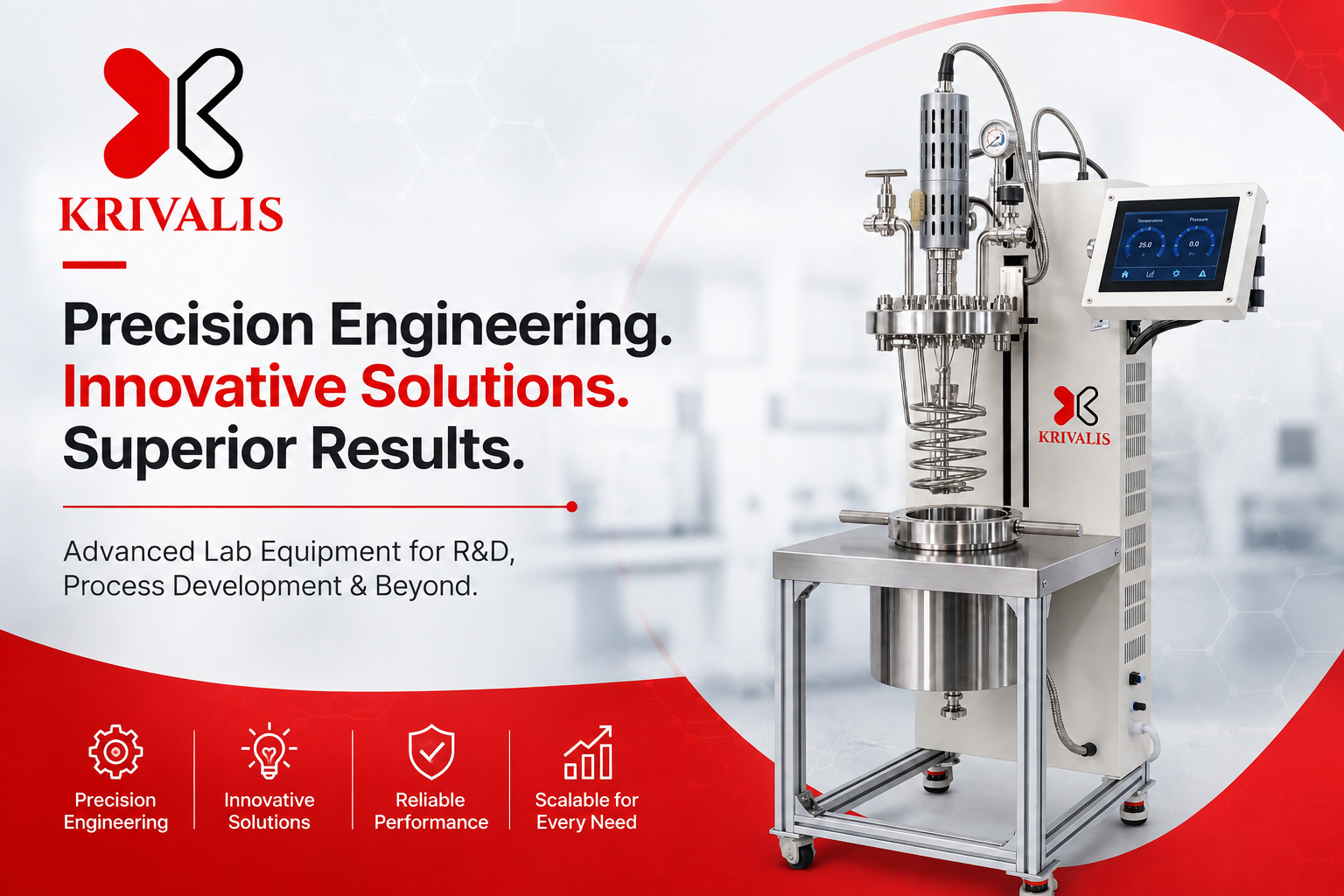
At Krivalis, we offer high pressure reactor solutions for laboratory and pilot-scale applications with options for custom configuration.

From Lab Reactor to Pilot Plant: Heat Transfer and Mixing Scale-Up
Reactors

From Lab Reactor to Pilot Plant: Heat Transfer and Mixing Scale-Up

Scale-up fails for physical reasons, not chemical ones. As a reactor grows, heat removal per unit volume falls and mixing time rises. This article explains the dimensionless numbers worth knowing, why jacket temperature stops controlling the reaction at scale, and what to measure before you commit to a pilot plant.

Read More
Heating Elements Compared: HRE Wire, SiC Rods and MoSiโ‚‚
Furnaces

Heating Elements Compared: HRE Wire, SiC Rods and MoSiโ‚‚

The heating element sets the maximum temperature, the atmosphere compatibility and the running cost of a furnace. This article compares resistance wire, silicon carbide and molybdenum disilicide elements, explains why the same element behaves differently in different atmospheres, and covers what to stock as spares.

Read More
Vacuum and Atmosphere Furnaces: When You Need One and What to Specify
Furnaces

Vacuum and Atmosphere Furnaces: When You Need One and What to Specify

Air is a reactive gas. Vacuum and atmosphere furnaces exist to remove it, and the level of removal changes the process, the hardware and the price. This article explains the pressure ranges that matter, the difference between vacuum and inert gas purging, and the specification details that decide whether a furnace meets its stated performance.

Read More
WhatsApp